

Why do i feel stuck in life? That question usually shows up when life feels heavy, decisions feel confusing, and even simple tasks start to feel bigger than they should. You may not be lazy, broken, or weak. Most of the time, feeling stuck is a sign that your mind, emotions, routine, or environment are overloaded.
Some people feel stuck because they are burned out. Others feel stuck because they are afraid of making the wrong choice. For many people, the real problem is not a lack of talent. It is stress, emotional exhaustion, and too much pressure to have everything figured out at once.
The good news is that feeling stuck is not permanent. Once you understand what is creating the blockage, you can start moving again with small, realistic steps.
Why do i feel stuck in life?
Feeling stuck usually happens when your thoughts, emotions, and actions stop moving in the same direction. You may want change, but your energy is low. You may know what needs to be done, but you keep delaying it. Or you may not even know what you want anymore.
This can happen for a few reasons:
- You are mentally exhausted.
- You are scared of failure.
- You are trying to please everyone.
- You are comparing your progress to other people.
- You have too many goals and no clear plan.
- You have been under stress for too long.
Sometimes the question why do i feel stuck in life is really a question about emotional burnout. Stress can affect your body, thoughts, feelings, and behavior, and when it builds up, motivation drops fast. Mayo Clinic notes that stress can lead to irritability, trouble concentrating, low motivation, and poor sleep. (mayoclinic.org)
When your brain is overloaded, even normal decisions can feel painful. That is not a character flaw. It is a signal that something needs to change.
Common emotional reasons you feel stuck

1) You are emotionally drained
When you spend too much time worrying, overthinking, or handling pressure, your mind gets tired. Emotional exhaustion makes everything feel harder than it is.
People often describe this as:
- feeling numb
- losing motivation
- procrastinating more than usual
- feeling irritated for no reason
- waking up already tired
This is one of the most common answers to why do i feel stuck in life.
2) You are afraid of making the wrong move
Fear can freeze progress. You may delay a decision because you want the “perfect” answer. But perfection usually keeps people stuck longer.
When fear takes over, the brain focuses on risk instead of growth. That creates hesitation, and hesitation becomes a habit.
3) You have too much unresolved stress
Chronic stress lowers frustration tolerance. Psychology Today explains that ongoing stress can make people more irritable and less able to handle pressure. (psychologytoday.com)
That means a small setback can feel huge. A small task can feel impossible. A normal day can feel mentally loud.
4) Your life feels out of alignment
Sometimes the problem is not laziness or stress. It is a mismatch.
You may be living a life that looks fine on paper but feels wrong inside. Maybe your work does not fit your strengths. Maybe your routine does not reflect your values. Maybe you have outgrown an old version of yourself.
When that happens, feeling stuck is often a sign that your life needs realignment, not more pressure.
How stress and irritability make everything harder
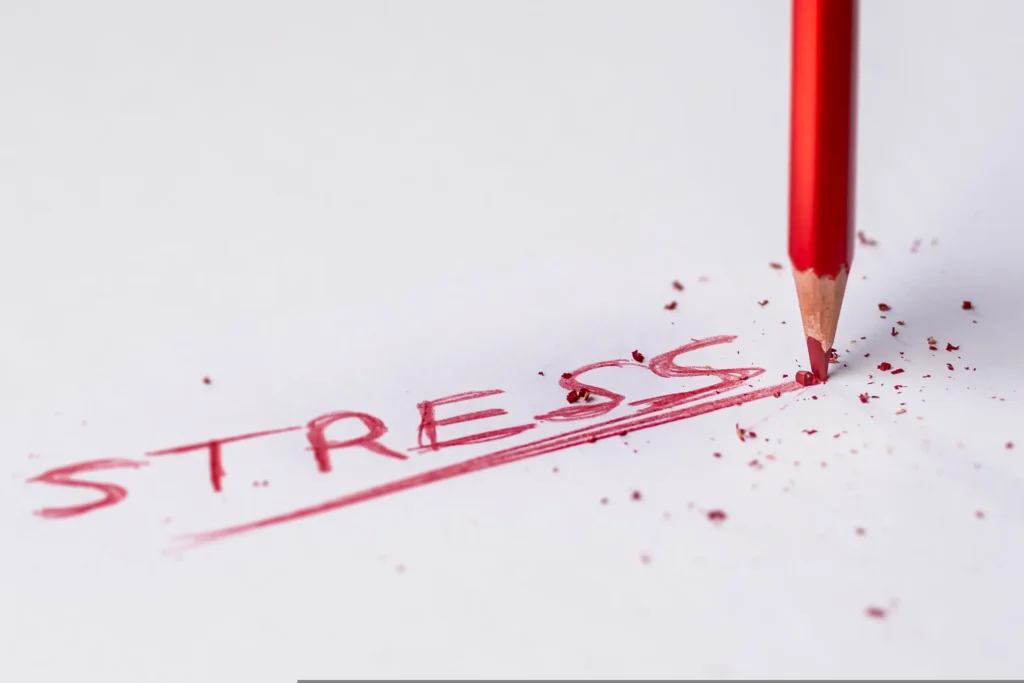
Stress and irritability often travel together. When stress keeps building, people may become short-tempered, impatient, or mentally restless. The National Institute of Mental Health and the American Psychological Association both describe irritability and angry outbursts as important stress-related or anger-related concerns. (nimh.nih.gov)
That matters because when you are irritated all the time, even small problems feel bigger.
You may notice:
- snapping at people easily
- feeling annoyed by simple requests
- losing focus quickly
- feeling guilty after reacting
- struggling to calm down after stress
This is where irritability and mental health connect. Irritability is not always just “bad mood.” It can be linked to stress, anxiety, burnout, or emotional overload. In some cases, irritability can also show up alongside other mental health conditions. (mayoclinic.org)
When that happens, progress feels blocked because your mind is busy surviving the day instead of planning the future.
What to do when life feels frozen
If you keep asking why you feel stuck in life, start with small actions that reduce mental pressure and restore clarity.
1) Stop waiting to feel motivated
Motivation usually comes after action, not before it.
Start with one tiny task:
- clean one corner of your room
- answer one message
- write one paragraph
- walk for 10 minutes
Small action breaks mental inertia.
2) Separate what is real from what is fear
Write down the exact problem. Then ask:
- What do I know for sure?
- What am I assuming?
- What is the next smallest step?
This simple exercise reduces overwhelm and helps your brain move from panic to problem-solving.
3) Use emotional regulation techniques
Emotional regulation techniques help you respond instead of react. The goal is not to suppress feelings. The goal is to slow them down so you can think clearly.
Try these:
- slow breathing for 2 minutes
- a short walk before reacting
- journaling the feeling instead of fighting it
- naming the emotion: angry, worried, disappointed, ashamed
- taking a pause before making decisions
The APA notes that relaxation strategies like deep breathing can help control anger. (apa.org)
4) Look for your real triggers
Sometimes the feeling of being stuck is triggered by repeated stress patterns.
Ask yourself:
- What situations drain me most?
- Who makes me feel tense?
- What time of day do I feel lowest?
- What thoughts keep repeating?
When you identify the pattern, you can begin changing it.
5) Make one decision instead of twenty
A stuck mind often tries to solve everything at once. That creates confusion.
Choose one focus only:
- Health
- Work
- Relationships
- Money
- Learning
Pick the area that would improve the rest the most.
Daily habits that bring back momentum
Momentum comes from repeated small wins. You do not need a dramatic life change overnight.
Build a simple morning reset
Spend 10 minutes on a calm start:
- drink water
- avoid scrolling immediately
- write your top 3 tasks
- stretch or breathe deeply
This gives your mind a clear direction.
Use a “minimum progress” rule
On hard days, do the smallest useful version of the task.
Examples:
- 5 minutes of reading instead of 1 hour
- one email instead of the whole inbox
- one workout set instead of none
That keeps the chain alive.
Protect your energy
Feeling stuck gets worse when your body is drained.
Support your energy with:
- better sleep
- regular meals
- less screen overload
- daily movement
- less doom-scrolling
When your body calms down, your mind becomes easier to guide.
Use self-reflection, not self-attack
Harsh self-talk usually creates more resistance.
Replace:
- “I am behind.”
- “I cannot do anything right.”
- “Everyone else is moving.”
With:
- “I am in a hard season.”
- “I can take one next step.”
- “My pace does not need to match anyone else’s.”
That shift is small, but it changes everything.
When to get support
Sometimes feeling stuck is more than a productivity issue.
Reach out for support if you notice:
- constant hopelessness
- sleep problems that do not improve
- frequent anger or irritability
- loss of interest in daily life
- trouble functioning at work or home
- anxiety that keeps growing
A mental health professional can help you understand whether stress, burnout, anxiety, depression, or another issue is making things feel stuck. That does not mean something is wrong with you. It means you deserve support.
Conclusion
If you keep wondering why do i feel stuck in life, the answer is often a mix of stress, fear, low energy, emotional overload, and unclear direction. That does not mean your life is ruined. It means you need a reset, not a label.
Start small. Reduce pressure. Notice your triggers. Use emotional regulation techniques. Take one practical step today instead of waiting for a perfect mood.
You do not need to fix everything at once. You only need to move again.
And once movement returns, clarity usually follows.
FAQs
1) Why do i feel stuck in life even when nothing is wrong?
You may be dealing with hidden stress, burnout, or emotional fatigue. Sometimes life looks fine from the outside, but your mind is overloaded.
2) Can stress make me feel stuck in life?
Yes. Stress can reduce motivation, increase irritability, and make it harder to focus or make decisions. That can create a strong feeling of being frozen.
3) What are the most common anger triggers and stress patterns?
Common triggers include lack of sleep, pressure, conflict, uncertainty, and constant comparison. The APA notes that people can learn to recognize triggers and use relaxation strategies to manage anger.
4) How do emotional regulation techniques help when I feel stuck?
They help you slow the emotional wave, think more clearly, and make better decisions. Breathing, journaling, pausing, and naming your emotions are simple ways to begin.
5) Is irritability and mental health connection real?
Yes. Irritability can appear with stress, anxiety, burnout, and other mental health conditions. If it is frequent or intense, it is worth taking seriously.
6) What should I do first if I feel stuck right now?
Do one small action, not ten. Drink water, write down the main problem, and choose the next smallest step. Progress starts with movement.