
Learning how to control mood swings is one of the most underrated life skills you can develop. One moment you’re fine, the next you’re snapping at someone you love or spiraling into sadness for no obvious reason. If that sounds familiar, you’re definitely not alone. Millions of people deal with emotional ups and downs every single day, and most of them have no idea why it keeps happening or how to stop it.
The good news? Mood swings are not some permanent flaw in your personality. They’re a signal your mind and body trying to tell you something. And once you understand what’s behind them, managing your emotions becomes a lot less overwhelming.
This guide walks you through everything: the real causes behind mood swings, what mental health has to do with it, and practical emotional regulation techniques you can start using today. No fluff, no generic advice just real, actionable strategies that work.
📋 Table of Contents
- What Are Mood Swings, Really?
- Short Fuse Causes: Why You Get Triggered So Easily
- Irritability and Mental Health: The Hidden Connection
- Anger Triggers and Stress: How They Fuel Each Other
- How to Stop Getting Angry Over Little Things
- Emotional Regulation Techniques That Actually Work
- Daily Habits to Stabilize Your Mood Long-Term
- FAQs
- Conclusion
What Are Mood Swings, Really?
Mood swings are rapid or dramatic shifts in your emotional state from calm to furious, from happy to low, sometimes within minutes. They’re not just “being emotional.” They’re a real psychological experience that affects your relationships, productivity, and quality of life.
📊 Did you know? According to the National Institute of Mental Health, approximately 1 in 5 adults in the U.S. experiences a mental health condition each year and unmanaged mood instability is one of the earliest warning signs.
Mood swings can be mild (feeling irritable after poor sleep) or severe (experiencing extreme emotional highs and lows). Recognizing them is the first step. Dismissing them as “just stress” is what keeps most people stuck.
Common Signs You’re Dealing With Mood Swings
- Feeling fine one hour, irritable or sad the next
- Overreacting to minor frustrations or criticisms
- Emotional exhaustion after social interactions
- Difficulty identifying why you’re upset
- Saying or doing things in anger you later regret
Short Fuse Causes: Why You Get Triggered So Easily
If you’ve ever caught yourself thinking, “Why do I get so angry over small things?” you’re asking the right question. A short fuse isn’t random. It has causes, and most of them are treatable.
The Most Common Short Fuse Causes
- Chronic sleep deprivation — Even one bad night makes the amygdala (your brain’s threat-detection center) 60% more reactive to negative stimuli, according to research published in the Journal of Neuroscience.
- Blood sugar crashes — Ever notice you’re grumpy when you haven’t eaten? Low glucose directly impacts prefrontal cortex function — the part responsible for emotional control.
- Suppressed emotions — Bottling up feelings doesn’t make them disappear. They build up and explode over something unrelated and minor.
- Chronic stress — Prolonged stress keeps cortisol elevated, which lowers your emotional threshold. Small things feel like big problems.
- Hormonal fluctuations — This is especially relevant for women dealing with PMS, perimenopause, or thyroid issues — but men aren’t immune either. Low testosterone is directly linked to irritability.
- Undiagnosed mental health conditions — Anxiety, ADHD, and bipolar disorder all commonly present with emotional volatility.
Irritability and Mental Health: The Hidden Connection
Most people think of depression as feeling sad. But for many people, depression shows up as constant irritability — snapping at loved ones, feeling annoyed by everything, zero patience. The same goes for anxiety.
A study from Psychology Today notes that irritability is one of the most overlooked symptoms of mood disorders and one of the most commonly reported by patients who go undiagnosed for years.
The link between irritability and mental health is real and important. If your mood swings are severe, persistent, or interfering with your relationships or work, speaking with a mental health professional isn’t a weakness it’s the smartest thing you can do.
Mental Health Conditions Linked to Mood Swings
- Generalized Anxiety Disorder (GAD) — constant worry fuels irritability
- Depression — emotional numbness alternating with frustrated outbursts
- Bipolar Disorder — extreme highs and lows that can feel uncontrollable
- ADHD — emotional dysregulation is a core but rarely discussed symptom
- PTSD — trauma responses that trigger sudden emotional flooding
Anger Triggers and Stress: How They Fuel Each Other
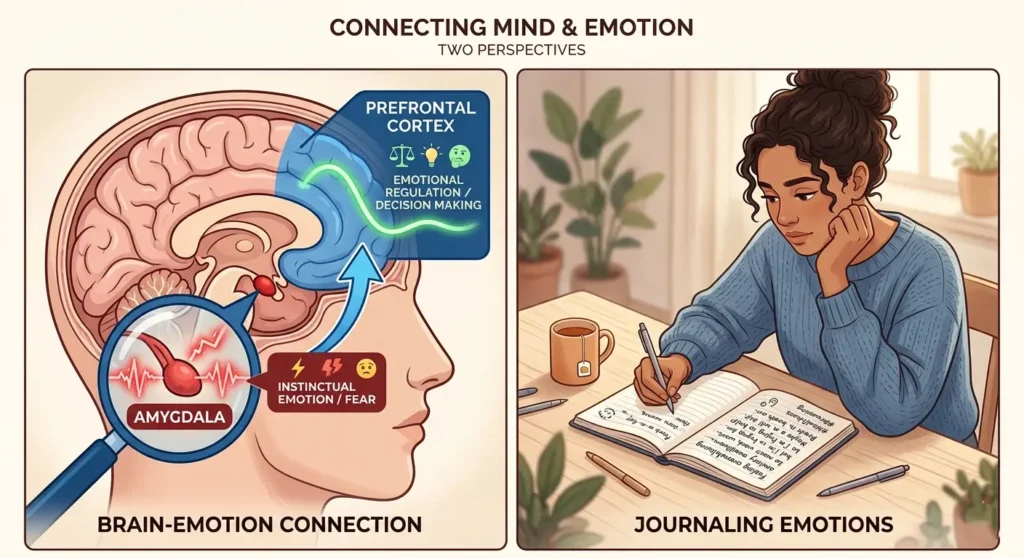
Anger and stress are a vicious cycle. Stress lowers your emotional threshold. A lowered threshold means more anger triggers. More anger creates more stress. And the loop continues.
Understanding your specific anger triggers is essential. Triggers are personal what sets you off might be totally fine for someone else. Common ones include:
- Feeling unheard or dismissed in conversations
- Being interrupted while focused on a task
- Traffic, waiting, or situations you can’t control
- Conflict with specific people (family, coworkers)
- Physical discomfort: hunger, pain, fatigue
- Perceived unfairness or being blamed wrongly
💡 Action Step: For one week, keep an anger journal. Every time you feel a spike of irritation, write down: What happened? What did I feel physically? What thought went through my head? Patterns will appear and patterns can be addressed.
How to Stop Getting Angry Over Little Things
If you want to know how to stop getting angry over little things, the answer isn’t “just relax.” That advice is about as useful as telling someone with a broken leg to “just walk it off.” What actually works is a combination of in-the-moment techniques and longer-term mindset shifts.
In-the-Moment Strategies
- The 5-second pause — Before you react, pause and count to five. This tiny gap activates your prefrontal cortex and interrupts the automatic anger response.
- Physiological sigh — Take a double inhale through the nose, then a long exhale through the mouth. This rapidly activates the parasympathetic nervous system and drops your heart rate.
- Name the emotion — Say to yourself: “I am feeling frustrated right now.” Research from UCLA shows that labeling emotions reduces their intensity almost immediately.
- Physical movement — Walk away (literally). A brief walk releases pent-up adrenaline and gives your nervous system time to reset.
- Cold water on your face or wrists — Triggers the “dive reflex” an automatic nervous system response that slows your heart rate.
Mindset Shifts That Change Everything
- Ask yourself: “Will this matter in 5 years? In 5 months? In 5 days?”
- Replace “This always happens to me” with “This is one moment, not my whole life.”
- Recognize that other people’s behavior is mostly about them not about you.
- Start seeing your anger as information, not a character flaw.
Emotional Regulation Techniques That Actually Work
Emotional regulation techniques are evidence-based strategies that help you manage how you respond to emotions not suppress them, but channel them constructively. These are the tools therapists teach their clients, and you can start using them today.
1. Cognitive Reframing
This involves changing the story you tell yourself about a situation. If someone cuts you off in traffic, the automatic story is “What a jerk.” Reframing it to “Maybe they’re rushing to a hospital” doesn’t excuse the behavior but it protects your peace.
2. Mindfulness and Body Scanning
Mindfulness trains you to observe emotions without being consumed by them. A daily 10-minute body scan — noticing where you hold tension (jaw? shoulders? chest?) increases your emotional awareness dramatically over time.
Apps like Headspace or Calm are great starting points. But even sitting quietly for 5 minutes, focusing on your breathing, makes a measurable difference.
3. Dialectical Behavior Therapy (DBT) Skills
DBT was originally developed for borderline personality disorder but is now used widely for emotional regulation. Key techniques include:
- TIPP: Temperature, Intense exercise, Paced breathing, Progressive muscle relaxation
- STOP skill: Stop, Take a step back, Observe, Proceed mindfully
- Opposite action: When the urge is to isolate, reach out. When the urge is to lash out, soften your tone.
4. Journaling for Emotional Release
Writing about your emotions particularly in an expressive, unfiltered way has been clinically shown to reduce cortisol levels and improve mood stability. You don’t need to write perfectly. You just need to write honestly.
Want a deeper dive into building emotional resilience from the ground up? Check out our guide on how to build self-discipline and emotional strength it complements everything in this article perfectly.
Daily Habits to Stabilize Your Mood Long-Term

Short-term techniques are like a fire extinguisher great in a crisis. But daily habits are what prevent the fires from starting in the first place.
The Non-Negotiable Daily Habits
- ☀️ Morning sunlight (10–15 min) — Regulates your circadian rhythm, which directly controls serotonin and melatonin production.
- 🏃 Exercise (30 min, 5x/week) — Exercise is the most underutilized antidepressant on the planet. It reduces cortisol, spikes dopamine, and improves emotional resilience.
- 😴 Consistent sleep schedule — Go to bed and wake up at the same time, even on weekends. Sleep is the single biggest lever for mood stability.
- 🥗 Stable blood sugar — Eat regular meals with protein and healthy fats. Avoid sugar spikes and crashes, which are directly tied to irritability.
- 🚫 Limit alcohol and caffeine — Both are mood disruptors. Alcohol is a depressant that worsens anxiety. Too much caffeine spikes cortisol.
- 📱 Social media breaks — Constant comparison and outrage content keeps your nervous system in a low-grade state of alarm. Schedule screen-free time daily.
- 🤝 Real human connection — Loneliness is a chronic stressor. Invest in relationships that feel safe and reciprocal.
Building these habits one at a time is far more effective than trying to overhaul everything at once. For a structured approach, read our article on building a morning routine for better mental health small shifts with real results.
📊 A Harvard study found that people who exercised regularly reported 43% fewer “bad mental health days” than those who were sedentary. Movement is medicine and it’s free.
FAQs: How to Control Mood Swings
1. What is the fastest way to control mood swings in the moment?
The fastest way to control mood swings is through controlled breathing specifically the physiological sigh (double inhale through the nose, long exhale through the mouth). This activates your parasympathetic nervous system within seconds and brings your emotional state down from a spike. Labeling your emotion out loud (“I feel frustrated”) also helps reduce its intensity almost instantly.
2. Can mood swings be a sign of a mental health condition?
Yes. Persistent or severe mood swings are often linked to anxiety, depression, ADHD, bipolar disorder, or PTSD. The key word is “persistent” occasional irritability is normal. If your mood swings are affecting your relationships or daily functioning over weeks, it’s worth speaking to a mental health professional.
3. How do I stop getting angry over little things at home?
The root cause is usually stress accumulation and lack of emotional processing. Practice the 5-second pause before reacting, keep a daily stress outlet (exercise, journaling, walking), and address the underlying stressors rather than letting them quietly build. The “little things” are rarely the real problem they’re just where built-up pressure leaks out.
4. Are there natural ways to control mood swings without medication?
Absolutely. Consistent sleep, regular exercise, a balanced diet (especially Omega-3s and magnesium-rich foods), mindfulness practice, and reducing caffeine and alcohol intake are all evidence-backed ways to naturally stabilize mood. These aren’t “instead of” therapy or medication they’re foundational and effective on their own for many people.
5. How long does it take to improve emotional regulation?
With consistent practice of emotional regulation techniques, most people begin noticing a difference within 2–4 weeks. Deep, lasting change where emotional steadiness becomes your default state typically develops over 3–6 months of intentional habit-building. Progress isn’t linear, but it is cumulative.
6. Can diet affect mood swings?
Yes, significantly. Your gut produces about 90% of your body’s serotonin. A diet high in processed foods, sugar, and alcohol directly disrupts gut health and, by extension, your mood. Eating whole foods, maintaining stable blood sugar, and staying well-hydrated are among the simplest and most effective tools for how to control mood swings naturally.
Your Emotions Are Not Your Enemy
Mood swings feel overwhelming when you don’t understand them. But once you start seeing them as signals rather than character flaws, everything shifts. Your emotions are trying to communicate with you — not punish you.
Learning how to control mood swings isn’t about becoming emotionless or endlessly calm. It’s about building the capacity to respond to life instead of reacting to it. That’s emotional intelligence. And it’s something every single person can develop with the right tools and the right mindset.
Start small. Pick one technique from this article and practice it for a week. Then add another. Progress compounds. Before long, you won’t recognize how differently you handle what used to push you over the edge.
Ready to Take Control of Your Emotional Life?
Explore more actionable guides on self-improvement, mental wellness, and building the life you want all at theselfrise.com.
👉 Start with: Build a Morning Routine for Better Mental Health