
Confidence is the invisible engine behind every major success story. It dictates how you navigate career pivots, sustain healthy relationships, and respond to the inevitable curveballs of life. Yet, for many, self-assurance feels like a fixed trait—you’re either born with it or you aren’t.
The reality? Confidence is a skill, not a birthright. Much like a physical muscle, it requires consistent resistance and training to grow. In the fast-paced, digital-first landscape of 2026, possessing the right confidence-building techniques is more critical than ever. This guide explores 12 actionable strategies to help you increase self-esteem naturally and silence the inner critic for good.
1. Redefine What Confidence Actually Is
Most people mistake confidence for the absence of fear or a lack of flaws. In truth, real confidence is action in the face of uncertainty.
- The Myth: “I’ll do it when I feel ready.”
- The Reality: Readiness is a byproduct of doing.
By shifting your mindset from “being perfect” to “being courageous,” you remove the pressure to have all the answers. This allows you to start before you’re ready—a hallmark of high achievers.
2. Master the Art of Cognitive Reframing
Your internal monologue is the primary architect of your self-esteem. If you are constantly practicing negative self-talk, you are essentially training your brain to fail.
To challenge this, use the “Friend Test.” Would you speak to a best friend the way you speak to yourself? Probably not.
- Old Thought: “I’m going to mess up this presentation.”
- New Thought: “I am prepared, and even if I stumble, I have the skills to recover.”
3. Build “Micro-Wins” to Create Momentum
Big dreams are great, but they can be paralyzing. To increase self-esteem naturally, you need a “proof portfolio”—a mental list of things you’ve successfully accomplished.
- The Strategy: Set three tiny goals every morning (e.g., drink 2 liters of water, clear your inbox, or walk for 15 minutes).
- The Result: Every time you check a box, your brain releases dopamine, reinforcing the belief that you are someone who gets things done.
4. Leverage the Mind-Body Connection
Your physiology dictates your psychology. Research in embodied cognition shows that adopting “expansive” postures can lower cortisol (the stress hormone) and increase testosterone (the confidence hormone).
- The “Power Move”: Before a big meeting, stand with your feet shoulder-width apart and hands on your hips for two minutes.
- Eye Contact: Practice holding eye contact just a second longer than usual during conversations. It signals to your brain—and others—that you are present and secure.
5. Implement Daily Habits to Build Confidence
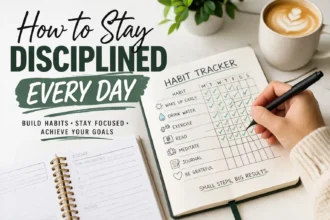
Confidence isn’t built in a weekend seminar; it’s built in the quiet moments of your daily routine.
- Journaling: Spend five minutes at night writing down one thing you did well.
- Skill Stacking: Dedicate 20 minutes a day to a specific skill (like public speaking or a new software). Competence breeds confidence.
6. Systematic Desensitization (The Comfort Zone Trap)
Growth and comfort cannot coexist. To overcome self-doubt, you must voluntarily expose yourself to “micro-discomforts.”
- Level 1: Order a coffee you’ve never tried.
- Level 2: Ask a question during a large webinar.
- Level 3: Lead a project at work. By the time you reach Level 3, the things that used to terrify you will feel like routine tasks.
7. Stop the “Comparison Trap”
In 2026, social media makes it easier than ever to compare your “behind-the-scenes” with everyone else’s “highlight reel.” This is a recipe for low self-esteem.
Pro Tip: Switch your focus from competitive (How do I rank against them?) to creative (How do I rank against yesterday’s version of me?).
8. Prioritize Physical Resilience
It is difficult to feel confident when you are physically depleted. Your brain is an organ, and it requires fuel.
- Sleep: Aim for 7–9 hours to keep your emotional regulation intact.
- Movement: Exercise isn’t just about aesthetics; it’s about proving to yourself that you can endure physical challenge. This translates directly to mental toughness.
9. Use Affirmations with “Implementation Intentions”
Generic affirmations like “I am a billionaire” often fail because the brain knows they aren’t true. Instead, use action-based affirmations:
- “I am a person who shows up and tries my best, regardless of the outcome.” This bridges the gap between where you are and where you want to be without triggering your brain’s “lie detector.”
10. Audit Your Social Circle

You are the average of the five people you spend the most time with. If your “inner circle” is filled with people who criticize or complain, your confidence will naturally wither. Surround yourself with “balcony people”—those who cheer you on—rather than “basement people” who pull you down.
11. Reframe Failure as Feedback
In the tech world, developers “fail fast” to find bugs. You should do the same with your life.
- The mindset shift: A rejected proposal isn’t a sign that you’re incompetent; it’s data telling you how to improve the next one. Once you stop fearing failure, you become unstoppable.
12. Practice “Self-Compassion”
Surprisingly, being hard on yourself doesn’t make you more successful—it just makes you more anxious. Confidence improvement strategies must include a layer of kindness. When you mess up, acknowledge it, learn from it, and move on. Forgiving yourself quickly is a superpower.
Confidence-Building Techniques
The job market and social landscape of 2026 value emotional intelligence and adaptability above all else. These traits are rooted in self-belief. Whether you are navigating the AI-driven workplace or building a personal brand, your ability to project confidence will be your greatest asset.
Frequently Asked Questions (FAQs)
Q: Can I build confidence if I’ve always been shy?
A: Absolutely. Shyness is a personality trait; confidence is a skill. You can be a shy person who is highly confident in their abilities.
Q: How long does it take to see results from confidence-building exercises?
A: You can feel an immediate shift in mood from body language changes, but deep-seated self-esteem usually takes 30 to 60 days of consistent habit-building to fundamentally shift.
Q: What is the fastest way to stop an anxiety spiral?
A: Focus on your breath and name three things you can see in the room. Grounding yourself in reality stops the “what if” scenarios that fuel self-doubt.
Take the First Step
Confidence is not a destination you reach and then stop; it is a continuous journey of self-discovery. By implementing these 12 confidence-building techniques, you aren’t just changing how you feel—you’re changing how you interact with the world.